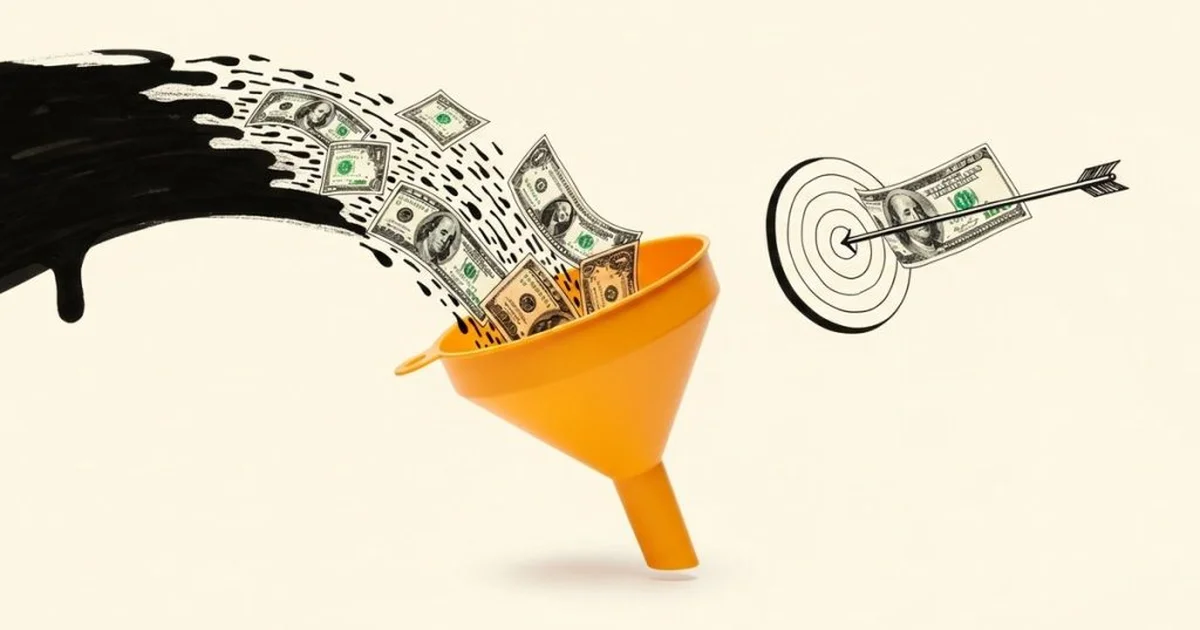
Let me be direct: most B2B Google Ads accounts are optimized for the wrong outcome. Teams celebrate low cost-per-lead while pipeline stagnates. Marketing reports “wins” that Sales can’t find in CRM. And Finance watches budget evaporate into clicks that never become customers.
The problem isn’t Google Ads itself. Roughly 71% of B2B buyers start their research with a Google search, which means paid search remains one of the cleanest demand-capture channels available. The problem is how we measure it—and what we optimize toward.
The Real Cost of Optimizing to the Wrong Metric
Here’s a scenario I’ve seen play out at three different PE-backed firms: Marketing runs Google Ads, hits a $70 CPL target, and declares victory. Six months later, the board asks why CAC payback stretched from 14 months to 22. The answer is almost always the same—cheap leads aren’t qualified leads.
Current benchmarks show B2B search campaigns converting at approximately 3.04%, with average CPCs around $4.22. Those numbers are fine as planning baselines, but they tell you nothing about whether your clicks become SQLs, opportunities, or revenue. If you’re reporting CPL to the board without connecting it to pipeline velocity and closed-won, you’re flying blind.
The fix requires a mindset shift. Stop treating Google Ads as a lead-generation machine and start treating it as a demand-capture system that feeds your revenue model. That means importing offline conversions into Google Ads, optimizing toward SQLs (not form fills), and building feedback loops between Marketing, Sales, and Finance.
Why B2B Google Ads Is Structurally Different
B2B sales cycles are longer, involve multiple decision-makers, and require highly targeted messaging—none of which Google’s default settings accommodate. The platform is built to maximize clicks and conversions at scale, which works beautifully for e-commerce and terribly for enterprise software with six-month sales cycles.
Three structural realities make B2B Google Ads harder than B2C:
Extended decision timelines. B2B buyers engage with 7 to 13 pieces of content before converting, and enterprise deals often take six months or longer to close. Your attribution window needs to reflect this reality, or you’ll kill campaigns that are actually working.
Multiple stakeholders with different intent signals. The practitioner searching “workflow automation software” has different needs than the CFO searching “workflow automation ROI calculator.” Targeting C-level executives, managers, and department heads requires segmented campaigns with distinct messaging—not one generic ad group.
Higher stakes per click. When CPCs run $4-8 in competitive B2B verticals, every misaligned click burns budget. Most businesses overpay on B2B Google Ads by 50-70%, largely because they haven’t built proper negative keyword lists or audience exclusions.
The CFO-Safe Framework for B2B Google Ads
Model or it didn’t happen. Before you spend a dollar on Google Ads, build a simple unit economics model that connects ad spend to revenue. Here’s the structure I use:
Start with your target CAC payback period—let’s say 12 months. Work backward: if your average contract value is $60,000 annually and gross margin is 75%, you can afford $45,000 in fully-loaded CAC to hit a 12-month payback. If Google Ads is one of four acquisition channels, your paid search budget ceiling is roughly $11,250 per new customer.

Now stress-test the assumptions. If your SQL-to-close rate is 20% and your MQL-to-SQL rate is 30%, you need approximately 17 MQLs per closed deal. At a $70 CPL, that’s $1,190 in ad spend per customer—well within your ceiling. But if lead quality drops and your MQL-to-SQL rate falls to 15%, suddenly you need 33 MQLs per deal, and your cost doubles.
This is why optimizing to CPL alone is dangerous. The variable that matters is lead-to-revenue conversion, not lead volume.
Practical Moves for the Next 30 Days
If your Google Ads account hasn’t improved in 90 days, run this diagnostic:
Check your conversion tracking. Are you importing offline conversions from CRM? Google’s automation requires at least 15-30 conversions per month per campaign to optimize effectively. If you’re tracking form fills but not SQLs, you’re training the algorithm on the wrong signal.
Audit your negative keywords. Negative keywords are overlooked by most advertisers, yet they’re the fastest way to stop bleeding budget. Search for your brand plus “jobs,” “careers,” “salary,” or “tutorial”—if those queries are triggering your ads, you’re paying for clicks from job seekers and students, not buyers.
Segment by intent, not just keyword. The B2B marketing funnel requires different strategies at each stage. Awareness-stage searches (“what is revenue operations”) need different landing pages and CTAs than decision-stage searches (“revenue operations software pricing”). Build separate campaigns for each stage and measure them against stage-appropriate KPIs.
Connect paid search to your SDR motion. Your highest ROI comes when paid search feeds SDRs with high-intent leads and outbound fills remarketing pools. If Marketing and Sales aren’t sharing data on which campaigns produce meetings (not just leads), you’re optimizing in the dark.
The Board-Ready Summary
Google Ads works for B2B when you treat it as a revenue system, not a lead factory. The math is straightforward: connect ad spend to pipeline, optimize toward SQLs and opportunities, and build feedback loops that let you kill underperforming campaigns before they drain budget.
Some operators argue that SMBs shouldn’t run paid ads at all, preferring cold outreach and organic content. That’s a defensible position if your CAC ceiling is tight. But for mid-market and enterprise firms with longer runways, paid search remains one of the few channels where you can capture demand at the moment of intent.
The question isn’t whether Google Ads works for B2B. The question is whether your measurement system is rigorous enough to prove it—or disprove it—before you’ve burned through a quarter’s budget.
Run the model. Show the assumptions. Build the sensitivity table. That’s how you turn a marketing expense into a board-grade investment case.