
The Protocol Behind the Promise
Measured just shipped something that sounds like a feature request from a tired VP of Marketing: a Model Context Protocol server that lets you ask ChatGPT, Claude, or Gemini where your next dollar should go. No dashboard login. No pivot table. Just a question in a chat window and an answer grounded in 30,000 incrementality tests across 200+ brands.
The pitch is seductive. But the real question for anyone who has to defend a media plan in a board meeting is whether this changes the math, or just the interface.
The Protocol Behind the Promise
MCP is the connective tissue that lets AI assistants query external systems through a standardized handshake. CIO recently called it "the USB-C of AI" because it eliminates the custom integration work that used to make every AI-to-enterprise connection a bespoke engineering project. Anthropic released MCP as an open standard in late 2024, and by early 2026, 28% of Fortune 500 companies had deployed MCP servers in production.
Measured's implementation means a marketer can type "Did my Meta prospecting move Amazon sales?" into Claude and get a plain-English answer drawn from Measured's intelligence database. The system runs thousands of geo-matched holdout experiments each quarter, measuring whether campaigns actually cause lift rather than simply correlating with it. That experimental rigor is what separates incrementality from the attribution models that have been lying to us for a decade.
CEO Trevor Testwuide, who spent 15 years in measurement including stints at Visual IQ and as co-founder of Conversion Logic, has been arguing since 2017 that incrementality would become a must-have for brands. The MCP server is his bet that the interface layer has finally caught up to the methodology.
Why This Matters for Budget Conversations
The timing is not accidental. IAB's 2026 State of Data Report found that incrementality testing is now the number-one measurement method for marketers, ahead of both attribution and MMM. But the same report revealed a problem: roughly two-thirds of marketers say their current MMM and incrementality setup does not produce consistent or reliable results.
That gap between adoption and confidence is where Measured's MCP play gets interesting. The value is not in the chat interface itself. It is in what the interface exposes: benchmarks against peer groups, diminishing return curves by channel, and the ability to ask follow-up questions without waiting for an analyst to pull a report.
For a CMO preparing for a board meeting, the difference between "we think Meta is working" and "our incremental ROAS on Meta prospecting is 1.4x, which is 15% below category median, and here's what happens if we shift $200K to TikTok" is the difference between a conversation about faith and a conversation about math.
The Assumptions You Need to Interrogate
Before you spin up an MCP connection and start asking Claude for budget advice, a few constraints deserve scrutiny.
First, the data is aggregated and anonymized across Measured's client base. That means the benchmarks are useful for directional guidance, but your specific business dynamics, your margin structure, your sales cycle, your competitive set, may not map cleanly to the aggregate. The model knows what worked for 200 brands. It does not know what will work for yours without your own test data feeding the system.
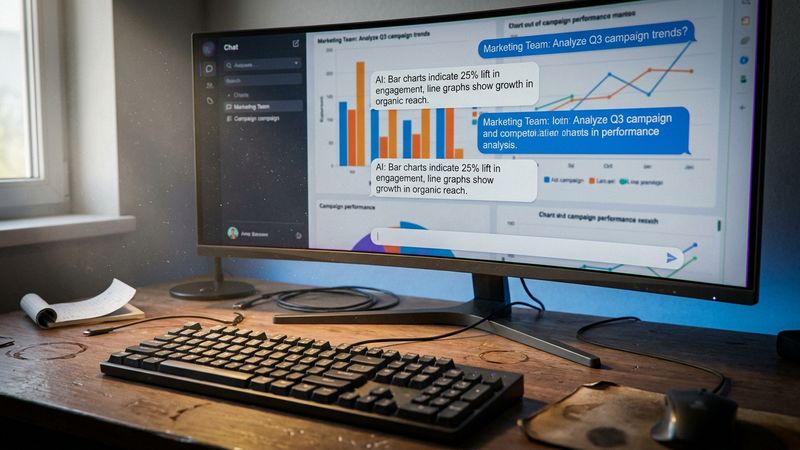
Second, incrementality testing requires holdouts. You have to be willing to turn off spend in some markets or audiences to establish a control. For brands with aggressive growth targets or thin geographic coverage, that experimental design can feel like a luxury. The MCP interface makes the answers easier to access, but it does not make the experiments easier to run.
Third, the chat interface obscures the methodology. That is a feature for speed but a risk for governance. When a VP asks "where should I spend my next dollar?" and gets an answer in 30 seconds, the temptation is to act on it without understanding the confidence interval, the sample size, or the lag between the test and the current market conditions. The math is still happening behind the interface. Someone on your team needs to understand it.
What a Pilot Looks Like
If you are evaluating whether to connect Measured's MCP server to your AI stack, here is a two-week pilot design:
- Week 1: Identify two to three channels where you have existing incrementality test results. Query the MCP interface for those same channels and compare the recommendations to your internal analysis. Document where the outputs align and where they diverge.
- Week 2: Run a scenario planning exercise. Ask the system what happens if you shift 10% of budget from your highest-spend channel to your second-highest. Compare the projected lift to your internal MMM forecast. If the numbers are within 15%, you have a validation signal. If they are not, you have a calibration problem to solve before you trust the system for live decisions.
The goal is not to replace your measurement stack. It is to add a query layer that makes the insights accessible to people who do not live in dashboards.
The Bigger Shift
Measured is not the only vendor moving in this direction. Google launched Meridian Studio and open-sourced its GeoX tool earlier this year. Sellforte, Triple Whale, and Mutinex are all building conversational AI layers on top of their measurement platforms. The race is not to build better models. It is to make the models usable by people who do not have time to learn another dashboard.
That shift has implications for how marketing teams are structured. If the CMO can ask Claude a budget question and get a defensible answer in 30 seconds, the role of the marketing analyst changes. Less time pulling reports, more time designing experiments and validating assumptions. Less time explaining what the data says, more time explaining what the data means.
For finance partners, the shift is equally significant. When incrementality data lives in the same interface where the CFO is already working, the conversation about marketing spend moves from "trust me" to "here's the model." That is the real promise of MCP: not that AI will make decisions for you, but that AI will make the math accessible to the people who need to approve the decisions.
The question is whether your organization is ready to act on answers that arrive faster than your governance processes can absorb them. Measured has built the bridge. Whether you cross it depends on how much you trust the math on the other side.


